

From semaglutide to next-generation lipidated peptides - why sonication is the key to oral and commercial-scale manufacturing.
GLP-1 peptides such as semaglutide are structurally unstable, prone to degradation, and remain mostly injectable. Even approved oral semaglutide shows bioavailability below 1%, driving higher doses, cost and formulation complexity. Liposomal encapsulation is a mature, membrane-mimicking carrier that can protect sensitive APIs and improve absorption - but its performance is governed less by lipid choice than by the preparation process. That is where ultrasound enters.

Why Sonication
High-intensity ultrasound induces acoustic cavitation, generating local shear and micro-mixing that break up lipid aggregates and shrink multilamellar vesicles into small, uniform liposomes. Semaglutide and tirzepatide already carry lipid tails that insert naturally into the phospholipid bilayer, so they load efficiently without complex conjugation. Encapsulation efficiency, particle size and dispersion stability are all tuned by sonication - in a controlled, repeatable way.
Scalable by Design
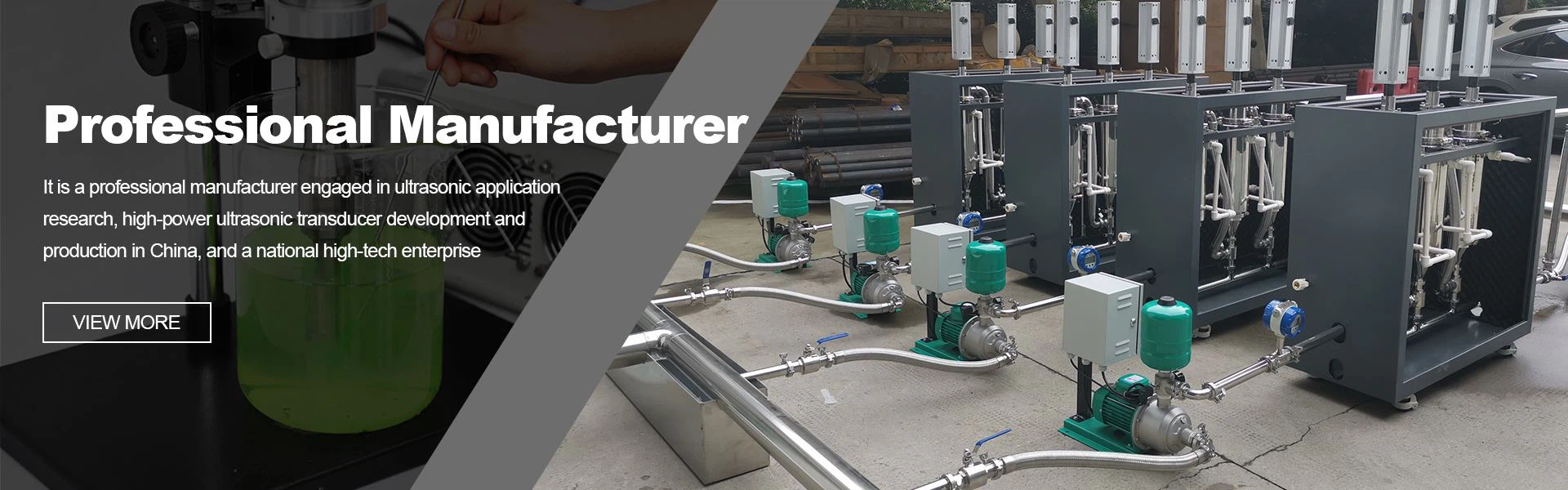
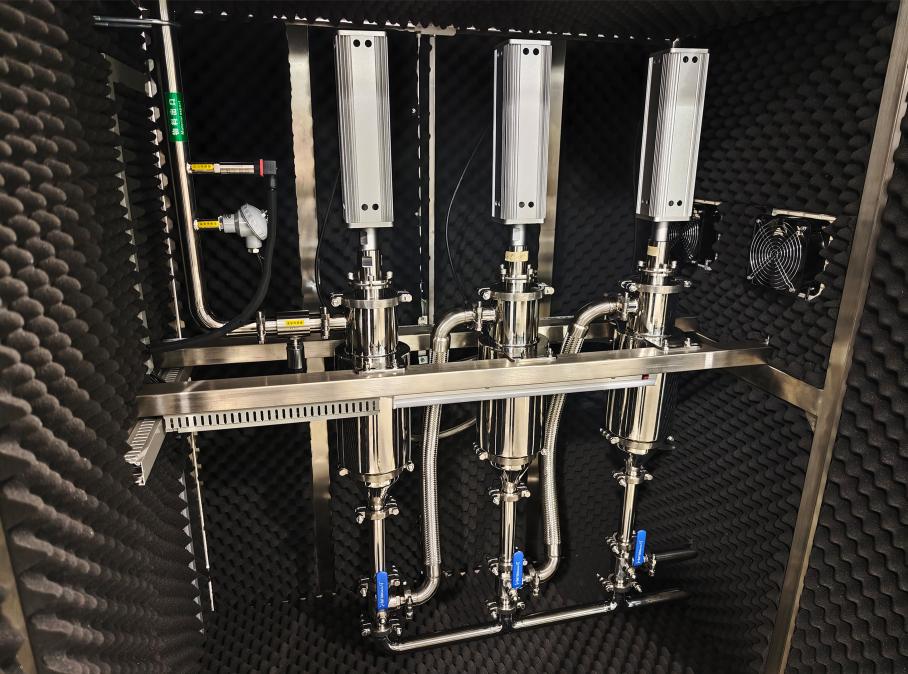
Unlike batch nanoparticle methods that depend on reactor geometry, sonication scales by energy density, so lab recipes transfer cleanly to pilot and production. For commercial manufacturing, continuous-flow sonication is the most practical format: the dispersion passes through a fixed-volume chamber under controlled pressure, amplitude, temperature and residence time - critical for heat-sensitive peptide liposomes.
From Lab Line to Production Line
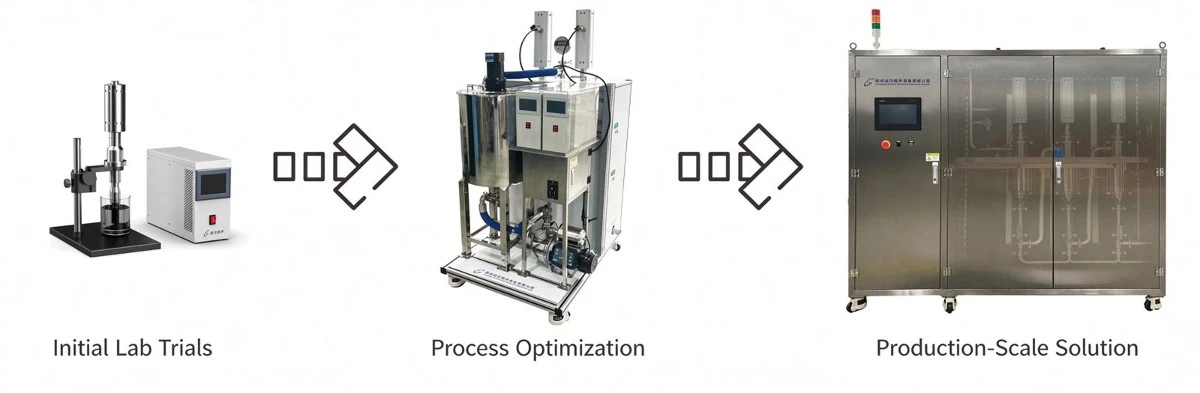
A complete ultrasonic platform covers the whole workflow: the YPS17B-HB lab-scale sonochemical unit for formulation screening and small-batch trials, and the circulating industrial YPS61B-MB for continuous, high power-density, GMP-aligned production with linear scale-up.
Beyond Semaglutide
As GLP-1 therapy moves toward dual- and multi-agonist peptides and patient demand for oral delivery grows, a scalable encapsulation platform becomes strategically important. The same process logic applies to other lipidated peptides, peptide conjugates and novel biologics - turning lab discoveries into robust, commercial-scale products.


